
REVIEW · UK
Padstow: Guided RIB Sealife Safari
The best part of this Padstow trip is the mix of real wildlife watching and a proper high-speed boat ride. You leave the Camel Estuary, race toward the Atlantic, then slow down near cliffs, islands, and coves where seals, dolphins, puffins, and seabirds may appear. I like the small groups, limited to 12, and the way the guide adds local stories instead of treating the trip as a simple joyride.
I also like that waterproof jackets and trousers are available to borrow, which matters because you will probably get spray. The main drawback is the sea itself: the RIB is fast and bouncy, and choppy water is common. If you are prone to seasickness, have back problems, are pregnant, or simply dislike rough boat rides, this is not the right outing.
Key things to know before you book
- About 25 miles of north Cornwall coastline: The route can include Port Isaac, Trevose Head, or other coastal spots, depending on the sea and wildlife.
- Wild animals are never guaranteed: You could see dolphins, seals, puffins, porpoises, whales, sunfish, and many seabirds, but nature sets the schedule.
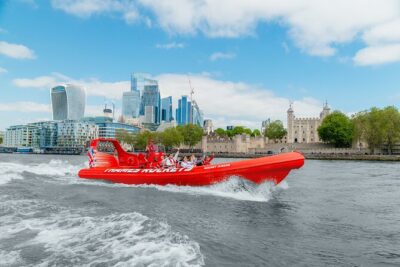
- A real RIB ride: Expect speed, bouncing, salty spray, and some airtime rather than a calm sightseeing cruise.
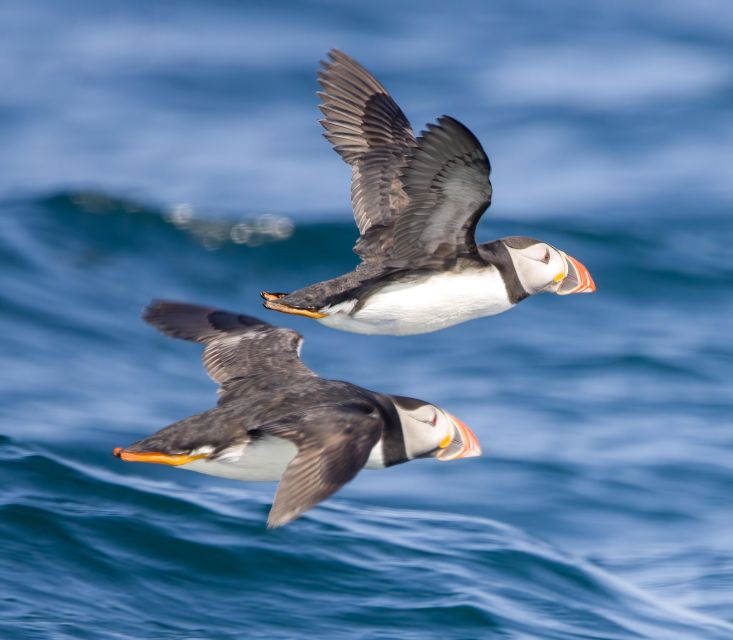
- Puffin sightings are seasonal: April to July is the best period for nesting guillemots, razorbills, and possible puffins near Puffin Island.
- Small group, live guide: Up to 12 people travel together, with an English-speaking guide explaining wildlife and local points of interest.
- Good value for active families and couples: At $60 per person for two hours, the price is fair if you want both wildlife and excitement, but less so if you prefer a quiet boat tour.
Leaving Padstow on the Camel Estuary
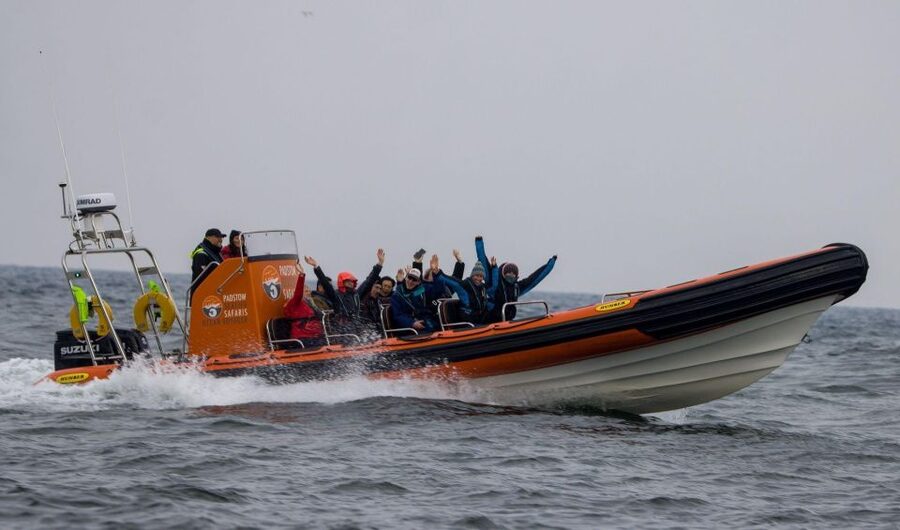
You meet at the Padstow Sealife Safaris office and check in 30 minutes before departure. That early arrival gives the crew time to organize life jackets, explain the trip, and issue waterproof clothing before you board.
The first stretch takes you out through the Camel Estuary. This gives you a gentler start before the boat reaches open Atlantic water. Your guide talks about the coast, local wildlife, and points of interest as the skipper handles the RIB.
The boats are open-top, so there is no cabin to retreat into. That is part of the fun, since you get wide views and a clear chance to take photographs. It also means you need to dress for the actual conditions, not just the weather on the quay. Even on a sunny day, wind and spray can make the ride feel cold.
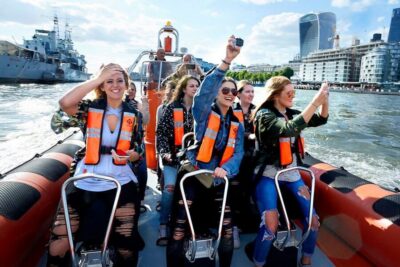
The waterproof trousers are worth accepting, not just the jacket. One family specifically found them useful, and several passengers describe getting wet as part of the experience. Wear outdoor clothing underneath, plus waterproof shoes. Bring sunglasses, sunscreen, a hat, and a camera, but protect your phone and other valuables from spray.
More RIB Boat Tours in the UK
- Torquay Coastal RIB Seafari
★ 5.0 · 410 reviews - Speedboat ‘Tower RIB Blast’ from Tower Millennium Pier – 20 minutes
★ 5.0 · 227 reviews - 30-Minute Raptor RIB Ride Activity in Torquay
★ 5.0 · 182 reviews
The RIB ride: fast, open, and often bouncy
Once you reach open water, the skipper can open up the throttle. The RIB covers a large stretch of coast during the two-hour trip, and this speed makes it possible to search several areas rather than remain in one bay.
I like this format because the boat ride is an experience in its own right. Several people compare it to a water roller coaster or a large jet ski. You may catch some air as the RIB crosses waves, followed by slower periods when the crew looks for animals or lets everyone take photographs.
The tradeoff is comfort. Choppy conditions are common, and the ride can be tiring if your stomach does not like motion. One passenger found the speed exciting at first but felt the ride became repetitive toward the end. That is a useful warning: this is not a gentle cruise with padded seats and steady narration.
The skipper adjusts the pace to the conditions and the group. If someone is feeling seasick, the boat may need to slow down. That is sensible, but it can affect the thrill for people who booked mainly for speed. I would book this trip for the combination of wildlife and adventure, not if your only goal is a nonstop high-speed run.
Searching for dolphins, seals, and whales
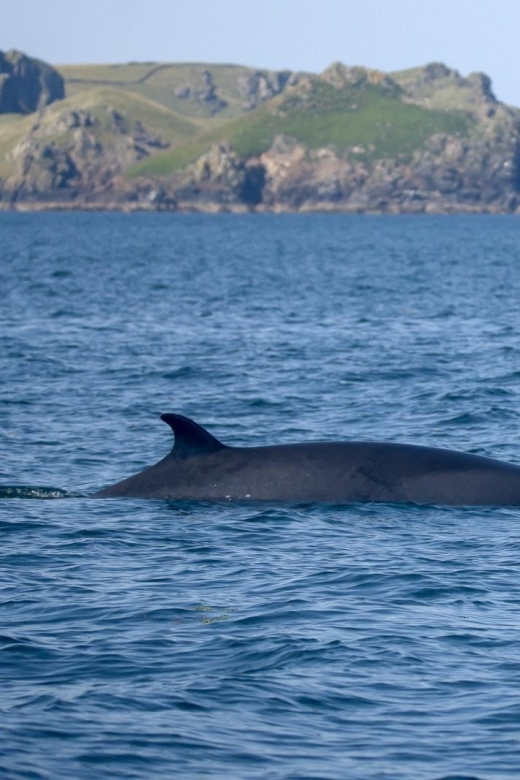
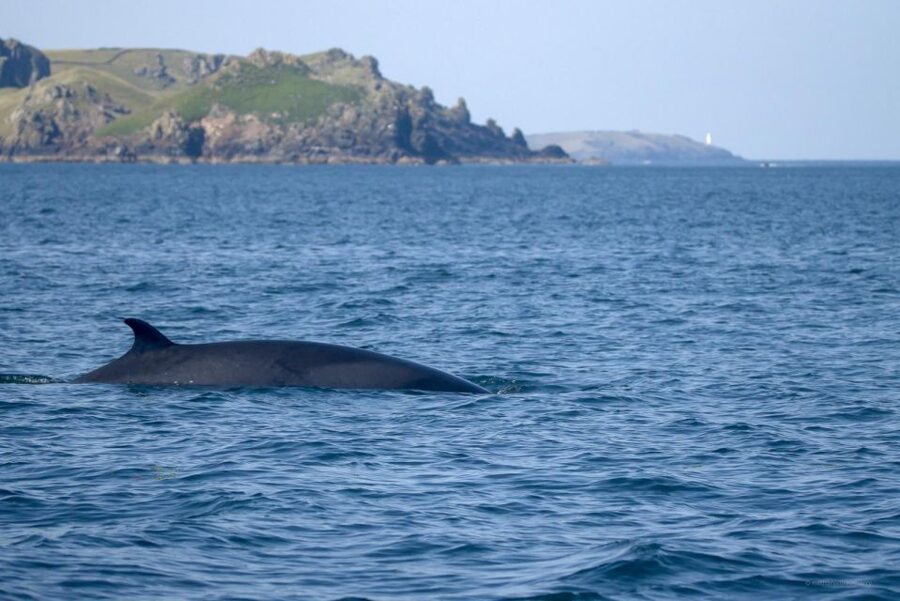
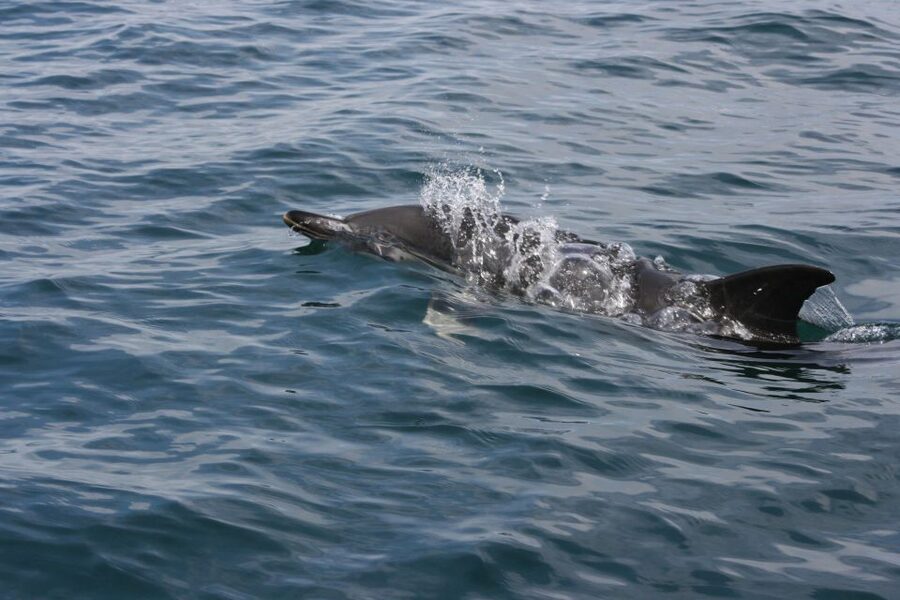
The crew slows the boat in places where wildlife is more likely. You may see common dolphins close to the RIB, sometimes swimming alongside it for a long stretch. Recent outings have included pods of dolphins, seals resting near the rocks, porpoises, tuna, and even a minke whale.
Dolphins are the star sighting. They can appear without warning, so keep scanning the water rather than waiting for the guide to point directly in front of you. When a pod approaches, the whole boat can shift from quiet searching to quick excitement as everyone tries to follow the movement.
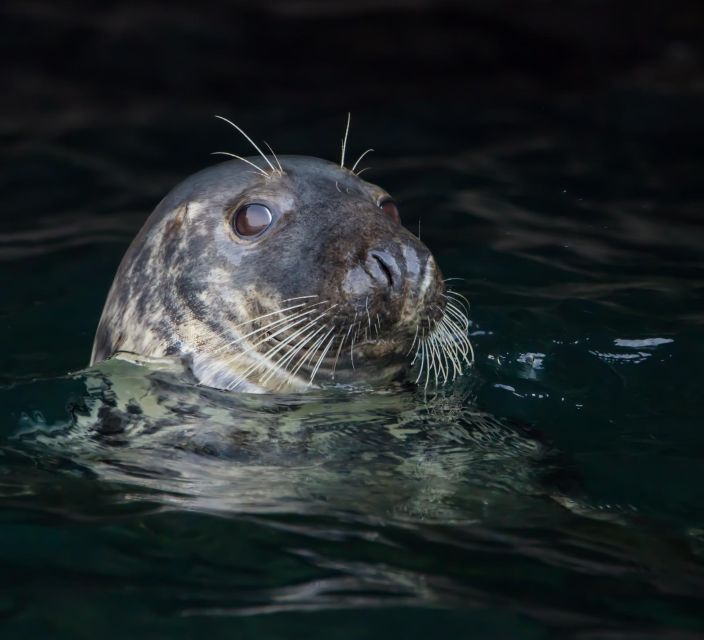
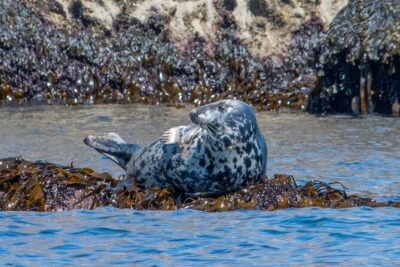
Seals are less dramatic but often easier to spot near rocky sections of the coast. You may see them resting on rocks or moving through the water. Some trips produce several seals, while another may produce only one. That variation is normal, and the crew cannot summon animals on demand.
Whales and sunfish are possible but much less certain. The same applies to dolphins and porpoises. One trip can bring a long dolphin encounter, while another may produce seals and birds without any dolphins. The guides set expectations clearly: this is wild nature, not a marine park.
That honesty improves the experience. You can enjoy the cliffs, waves, and birds even if the larger animals stay out of sight. Bring binoculars if you have them, as one passenger wished they had. They are especially useful for birds and animals farther from the boat.
Puffin Island and the spring bird colonies
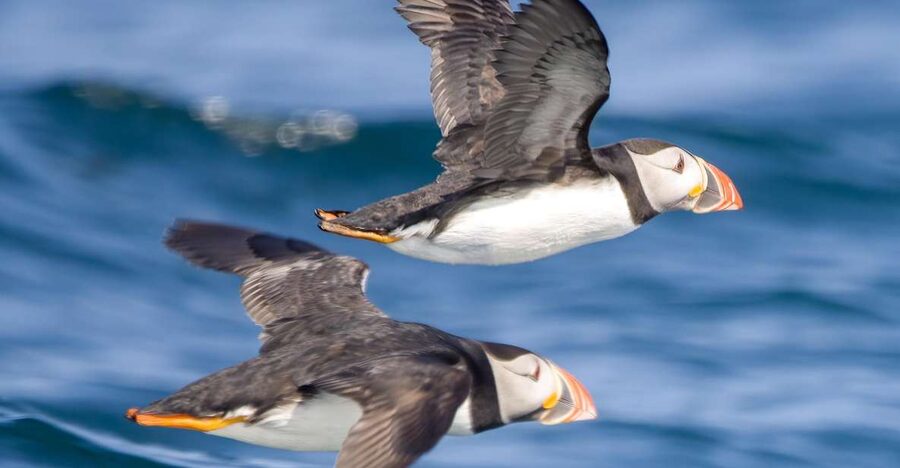
From April to July, the cliffs are at their most active. Guillemots and razorbills gather on the nesting ledges, and the boat may visit Puffin Island, one of the last places in Cornwall where puffins nest.
Puffins are not guaranteed, but the chance adds a special seasonal reason to book in late spring or early summer. Several trips in May, June, and July included puffins along with dolphins and seals. If puffins are your main goal, time your visit within that April to July window and keep your expectations flexible.
The birdlife goes well beyond puffins. Watch for gannets, shearwaters, fulmars, oystercatchers, shags, and cormorants. Gannets feeding near the boat can be particularly impressive, with their sharp dives and bright white bodies easy to pick out against the water.
Your guide helps turn distant birds into part of the trip rather than background noise. Guides such as Harriet, Kelsey, Ian, Anne, Jenny, and Emma have been praised for explaining what you are seeing and answering questions. The exact guide depends on the departure, but the format is consistent: wildlife information mixed with local stories and a bit of humor.
Same coast, a different run:
- High-Speed Thames River Speedboat in London
★ 5.0 · 3,971 reviews - Speedboat Cruise Tour: Embankment OR Westminster Pier -70 minutes
★ 5.0 · 777 reviews - Iconic Sights of London: High-Speed Boat Trip
★ 5.0 · 773 reviews - London: River Thames Speed Boat Tour
★ 4.9 · 713 reviews
Port Isaac or Trevose Head, depending on conditions
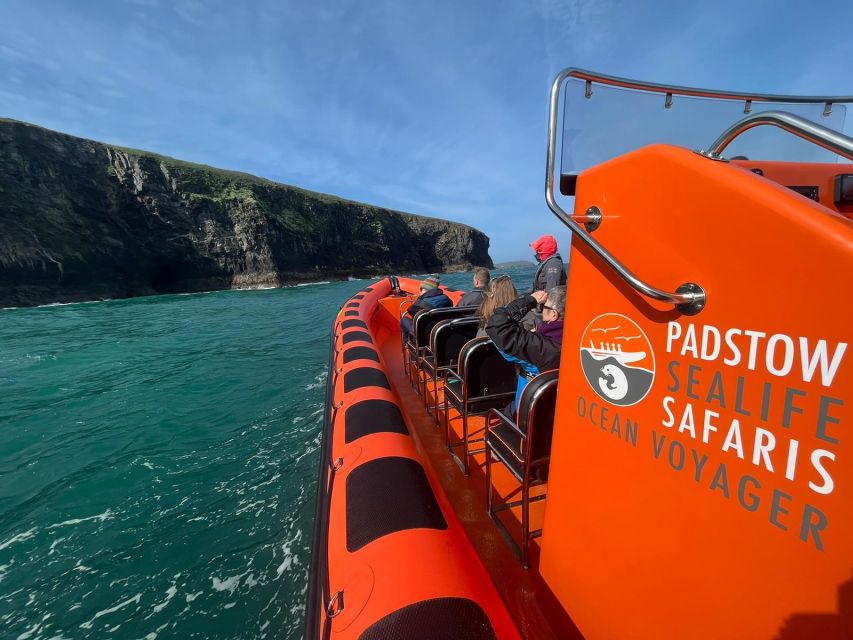
The route changes according to weather, sea conditions, and sightings. That flexibility is useful because the skipper can spend time where the best opportunities are rather than follow a rigid path.
In suitable conditions, the boat may head toward Port Isaac. The village is known for its connection with Doc Martin, so fans of the show get an extra point of interest from the water. You see the coast from a less familiar angle, with the boat providing views that are not available from the road.
Another possibility is Trevose Head. From the sea, you get a distinctive view of the newer Padstow Lifeboat Station. This is a good reminder that the trip is not only about animal sightings. The coast itself, its working maritime links, and its local stories give the journey substance when wildlife is quiet.
The crew may also stop near other coves and cliffs. These pauses let you take photographs and give everyone a chance to look carefully rather than watch the coastline blur past at speed. The contrast between racing over the waves and sitting still near a cliff is one of the trip’s strongest features.
Guides, skippers, and the small-group feel
The group limit of 12 matters. A small RIB gives you a better chance of hearing the guide and seeing the animals without a large crowd blocking your view. It also makes the trip feel more personal than a large sightseeing boat.
The guide and skipper have different jobs, and both shape the experience. The guide explains seabirds, marine life, and local heritage. The skipper reads the water, chooses the route, manages the speed, and positions the boat safely near wildlife.
Past departures have featured skippers such as Mark, whose wave handling and sense of balance were praised, along with guides including Harriet and Kelsey. You should not expect a specific person unless your booking confirms it, but the crew style is clear: friendly explanations, practical safety advice, and careful handling around animals.
I particularly value the crew’s approach to wildlife. The boat does not chase animals aggressively or treat them as props. Dolphins may come close on their own, but the crew keeps a respectful distance and avoids feeding or disturbing them. Drones, fishing, and feeding animals are not allowed.
Is $60 good value for two hours?
At $60 per person, the trip is not a bargain family amusement ride, especially if several teenagers are joining. One passenger felt the cost was the only real downside. For a two-hour open-water trip, the price is easier to justify when you think of it as both a coastal excursion and an active boat adventure.
You are paying for a limited-size boat, a guide, safety equipment, waterproof clothing to borrow, and a route covering about 25 miles. If you see dolphins close to the RIB, seals, puffins, or a whale, the experience can feel like excellent value.
But the price does not buy guaranteed wildlife. If the sea is quiet and the animals stay hidden, you still receive the boat ride, coastal views, birdlife, and commentary. I would make the booking only if you are happy with that uncertainty.
Free cancellation up to 24 hours before departure and the option to reserve now and pay later make it easier to fit the trip into a changing Cornwall itinerary. Check in 30 minutes early, since the crew needs time to prepare everyone before boarding.
Who should book this Padstow safari?
I would recommend it to couples, families with older children, photographers, birdwatchers, and anyone who wants a more active way to see the north Cornwall coast. Children under two cannot join, and the experience is not suitable for pregnant women, wheelchair users, people with mobility problems, recent surgery, or back problems.
It can work well for children who love animals. One five-year-old was nervous at first but settled into the trip and had a great time. The open boat and speed may still feel intense for some children, so explain the bouncing and spray before you book.
You should also think carefully about motion sickness. The information specifically rules out people prone to seasickness or motion sickness, and that is not a minor warning. Choppy water is common, and there is no sheltered cabin where you can escape the movement.
For older adults, the stated suitability limit is under 80 years. Anyone close to that age should check directly before booking, especially if balance, mobility, or back comfort is a concern.
Practical ways to enjoy the ride
Arrive in weather-appropriate clothes and use the loaned waterproof trousers as well as the jacket. Wear layers, waterproof footwear, and clothing you do not mind getting salty.
Keep sunglasses on a cord or secure them well. They help with glare and spray, but loose items can be lost quickly on an open RIB. Use a waterproof phone case or dry bag for cameras and phones.
Bring binoculars if you have them. They are not required, but they can help with seabirds and animals that remain at a distance. A camera with a secure strap is more useful than a large bag of loose equipment.
Do not expect every part of the trip to be spent watching animals. You will also spend time moving between locations, crossing waves, viewing cliffs, and listening to local information. That mixture is what makes the two hours work.
Should you book the Padstow RIB safari?
Book it if you want wildlife plus a thrill ride, and if you can accept that nature may offer dolphins one day and only a seal or seabirds the next. The strongest sightings include dolphins swimming beside the boat, puffins in season, seals near the cliffs, and large numbers of seabirds.
Skip it if you need a smooth, quiet cruise or if you often feel sick on boats. The ride is fast, open, and frequently bouncy, with spray part of the deal.
For most active visitors to Padstow, I think the combination of a skilled skipper, an engaging guide, a small group, and dramatic Atlantic scenery makes $60 reasonable. Just book with the right expectation: the sea provides the wildlife, while the crew gives you the best possible chance of finding it.
FAQ
How long is the Padstow Sealife Safari?
The trip lasts two hours. You travel from Padstow through the Camel Estuary and out toward the Atlantic Ocean, covering about 25 miles of coastline.
What wildlife might I see?
Possible sightings include seals, dolphins, porpoises, whales, sunfish, tuna, puffins, guillemots, razorbills, gannets, shearwaters, fulmars, oystercatchers, shags, and cormorants. Wildlife is not guaranteed.
Is the RIB ride rough?
The open-top RIBs are fast and bouncy, and choppy conditions are common. You may get wet and experience some airtime while crossing waves.
Is waterproof clothing provided?
Waterproof jackets and trousers are available to borrow, and life jackets are included. You should still arrive in outdoor clothing and waterproof shoes.
When is the best time to see puffins?
Puffins may be seen from April to July, when nesting guillemots and razorbills are also present along the cliffs. A sighting cannot be guaranteed.
Where do I meet the boat?
Meet at the Padstow Sealife Safaris office. Check in begins 30 minutes before your scheduled departure.
Just added around the UK
- Northern Islands RIB Tour★ 5.0 · 15 reviews
- Speedboat ‘THE THAMES BEAST’ from Tower Millennium Pier – 40 mins★ 5.0 · 35 reviews
- PRIVATE HIRE SPEEDBOAT ‘ULTIMATE TOWER RIB BLAST’ FROM TOWER PIER – 40 Minutes★ 5.0 · 27 reviews
- PRIVATE HIRE 45 min Speedboat Tour – Embankment/Westminster Pier★ 5.0 · 55 reviews
- PRIVATE HIRE SPEEDBOAT ‘TOWER RIB BLAST’ – 20 minutes from Tower Millennium Pier★ 5.0 · 33 reviews
- PRIVATE HIRE SPEEDBOAT ‘THAMES BARRIER EXPERIENCE – 70 minutes from Embankment★ 5.0 · 87 reviews
- Fort William Speed Boat Adventure 60 minutes★ 5.0 · 11 reviews
- Jurassic Coast Rib Tour – Exmouth★ 5.0 · 7 reviews
UK Speedboat Tours, compared.
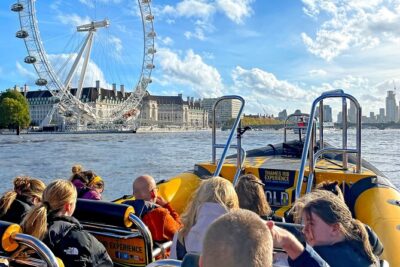
Speedboat Cruise Tour: Embankment OR Westminster Pier -70 minutes
Read our review →
Browse the lists this tour appears in